
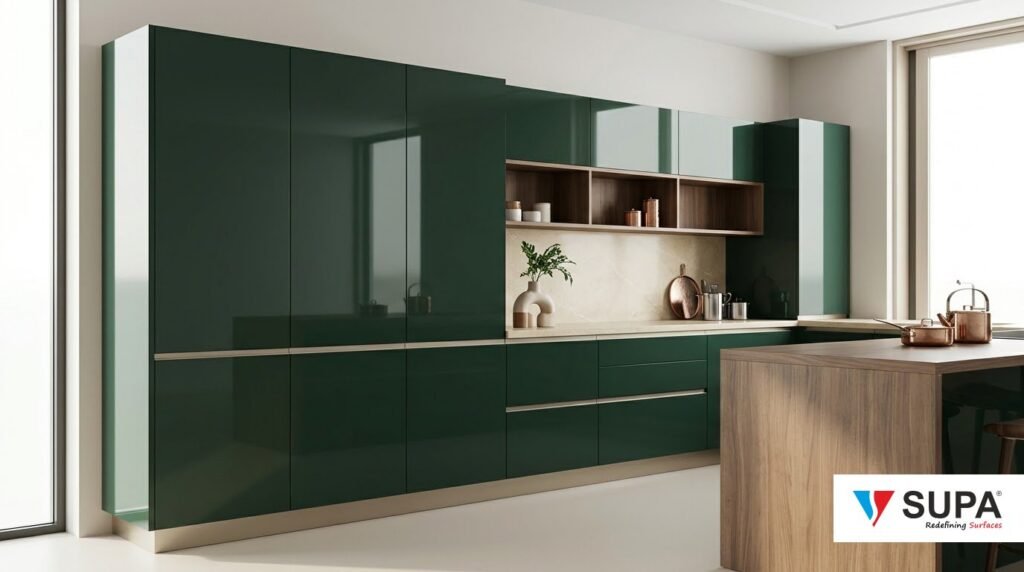
Supa Acryglem is Supalam’s acrylic laminate line, built around a high-gloss, mirror-like surface finish that regular high-pressure laminate can’t quite match.
Acrylic laminates work differently from standard HPL. An acrylic sheet is bonded on top of the laminate base, which is what produces the deep, reflective shine and richer colour depth that makes Acryglem stand out on kitchen shutters and feature walls.
It’s a premium finish category, so understanding exactly where it earns its cost is more useful than treating it as a drop-in replacement for standard laminate everywhere in a home.
For anyone comparing quotes across dealers, knowing where the acrylic premium is actually justified, and where standard laminate will look and perform just as well, is often the difference between a design budget that stretches across the whole home and one that runs out halfway through.
Acrylic laminates have grown quickly in popularity across Indian modular kitchens over the past few years, largely driven by social media and showroom displays where the mirror finish photographs exceptionally well. That popularity makes it worth separating genuine performance advantages from finish trends that may not suit every home, which is exactly what the sections below are built to do.
The Mirror-Gloss Finish Is Acryglem’s Core Advantage
Standard high-gloss laminate reflects light in a fairly flat way, while an acrylic-faced sheet like Acryglem produces a genuine mirror-depth shine because the acrylic top layer sits above the printed decorative layer rather than being part of the same pressed sheet. That extra layer is what gives acrylic laminates their characteristic richness, especially in solid colours and deep tones.
This is why acrylic finishes are the go-to choice for modular kitchen shutters and wardrobe fronts where a genuinely premium, showroom-grade look is the priority over the softer sheen of standard gloss laminate.
Where Acryglem Performs Best, and Where to Think Twice
Modular kitchen shutters, wardrobe front panels, and feature walls in living rooms are where Acryglem earns its keep. These are high-visibility vertical surfaces where the reflective finish gets seen and appreciated daily. It’s less suited to countertops or high-abrasion horizontal surfaces, since the acrylic top layer, like any high-gloss finish, shows scratches more readily than a matte or textured surface.
Cleaning and maintenance also need slightly more care than a matte finish. Fingerprints and light dust show up faster on a mirror surface, so it suits households and commercial spaces that are comfortable with the higher-maintenance trade-off in exchange for the visual impact.
How Acryglem Compares to Standard High-Gloss Laminate
Standard high-gloss HPL is more forgiving day-to-day and costs less, making it the practical choice for most gloss applications across a home. Acryglem sits a tier above that as a specifically premium finish, chosen when the brief calls for a showroom-grade shine on a specific feature, such as a kitchen island, a statement wardrobe wall, or a reception desk in a commercial interior.
Supalam positions Acryglem as that upgrade tier rather than a full replacement for its standard laminate range, which is why most projects mix the two: Acryglem on the visual centrepiece, standard laminate elsewhere.
How to Maintain an Acrylic Laminate Surface Long-Term
Acryglem’s mirror finish rewards a small amount of regular care far more than it needs any special product. A soft microfiber cloth and a mild, non-abrasive cleaner are enough to keep the surface looking new; anything containing ammonia or an abrasive scouring compound will dull the shine over repeated use and should be avoided entirely.
Wiping down handled surfaces such as kitchen shutter edges every few days, rather than letting fingerprints accumulate, keeps the mirror effect looking intentional rather than neglected. It’s also worth avoiding direct contact with sharp metal objects and hot cookware, since acrylic-faced surfaces, while durable, will scratch or mark under the kind of abuse a countertop-grade HPL surface would shrug off without issue.
Cost and Ordering Considerations for Acryglem Projects
Because Acryglem is a premium tier, it’s worth planning exactly which surfaces will carry it before finalising a quote rather than defaulting to it across an entire kitchen or wardrobe run. Most cost-conscious projects apply it to the two or three surfaces that get the most visual attention, the main shutter run or a feature wall, and use standard Unitop-grade laminate for less visible sections like cabinet interiors or utility area shutters.
Colour and shade consistency also matter more with a mirror finish than with matte laminate, since even small batch variations are more visible under a reflective surface. Ordering the full quantity needed for a given run in a single batch, rather than topping up later from a different production run, is the safest way to avoid a visible shade mismatch once the kitchen or wardrobe is fully installed.
Acryglem Shade and Colour Trends for Modern Interiors
Deep, saturated solid colours remain the strongest performers in an acrylic finish, since the mirror-depth effect is most visible against a single uninterrupted tone rather than a printed pattern. Charcoal, deep maroon, forest green and true black have all held steady as popular choices for statement kitchen shutters and wardrobe fronts, largely because they photograph well and pair easily with a wide range of countertop and flooring materials.
White and off-white acrylic finishes have also grown in popularity for wardrobe fronts specifically, since the mirror gloss adds a sense of depth and light to smaller rooms without introducing colour that competes with the rest of the interior scheme. Metallic and pearl-effect acrylic shades are a smaller but growing category, generally reserved for a single feature wall or a reception counter in a commercial space, since a full room of metallic gloss can quickly feel overwhelming rather than premium.
Two-tone kitchen designs have also driven a specific pattern in how Acryglem gets specified: a dark acrylic base for the lower shutter run paired with a lighter matte or standard laminate for the upper cabinets, which balances the premium mirror finish against a more forgiving, easier-to-maintain surface at eye level and above. This kind of split specification is worth discussing directly with a dealer early in the design process, since it changes both the total acrylic quantity needed and the overall project cost compared to a full-kitchen acrylic finish.
At a Glance: Comparison Table
| Factor | Supa Acryglem (Acrylic) | Standard High-Gloss Laminate |
|---|---|---|
| Finish depth | Mirror-like, high depth | Flat gloss shine |
| Best use | Kitchen shutters, wardrobe fronts, feature walls | General gloss applications across the home |
| Scratch visibility | Higher, shows marks more readily | Moderate |
| Maintenance | Needs regular wiping to stay showroom-ready | Lower maintenance |
| Positioning | Premium / feature-surface tier | Everyday gloss tier |
Frequently Asked Questions
What makes Supa Acryglem different from regular gloss laminate?
Acryglem uses an acrylic top layer bonded over the decorative laminate, which produces a deeper, mirror-like reflection compared to the flatter shine of standard high-pressure gloss laminate.
Is Acryglem good for kitchen shutters?
Yes, it’s one of the most common applications. Modular kitchen shutters benefit from the premium showroom-grade finish, though it’s worth pairing with careful daily wiping since gloss surfaces show fingerprints more readily.
Does Acryglem scratch easily?
Like most high-gloss surfaces, it shows scratches more visibly than a matte or textured finish, so it’s best used on vertical, lower-contact surfaces such as shutters and panels rather than countertops.
Is Acryglem more expensive than standard laminate?
Yes. The additional acrylic layer and finish quality position it as a premium tier above standard high-gloss laminate, which is why most projects use it selectively on feature surfaces rather than throughout.
Can Acryglem be used outside the kitchen?
Definitely. Wardrobe front panels, living room feature walls, and reception or lobby surfaces in commercial interiors are all common uses wherever a high-visibility, premium shine is the goal.
View the full Supa Acryglem range and shade options in the Supalam e-catalogue.