
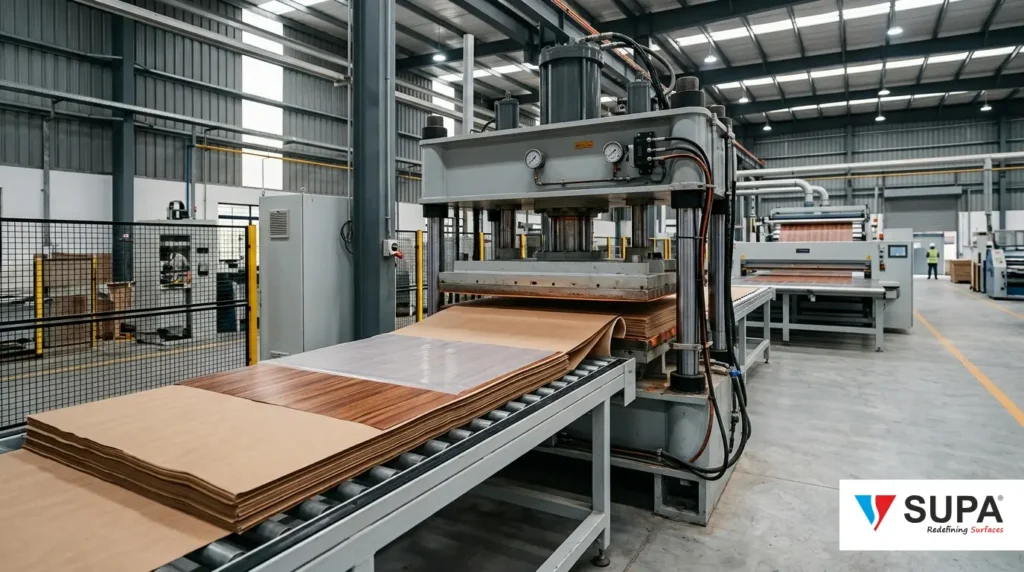
Laminate is made by layering kraft paper, printed decorative paper, and a protective overlay, then fusing them together with resin under heat and pressure. Understanding this process explains why laminate is so durable and why manufacturing quality matters so much. This guide walks through the full laminate manufacturing process step by step, building on the basics in the complete laminate guide.
What are the raw materials used to make laminate?
The raw materials used to make laminate are kraft paper for the base layers, decorative paper for the design, resin for bonding, and a clear overlay for protection. These simple materials combine to create a remarkably durable surface.
Kraft paper provides the structural core, giving the sheet its strength and thickness. The decorative paper carries the printed colour or pattern. Resin, usually phenolic for the base and melamine for the surface, binds everything together and hardens under heat. The quality of these materials directly determines how the finished laminate looks and performs.
What are the steps in the laminate manufacturing process?
The laminate manufacturing process involves impregnating the papers with resin, layering them in sequence, and then pressing them under heat and high pressure until they fuse into a single solid sheet. Each step is controlled precisely to ensure consistency.
First, the kraft and decorative papers are soaked in resin and dried. Next, they are stacked in the correct order, with the decorative layer near the top and the protective overlay on the surface. Finally, the stack is pressed between heated plates, where the resin cures and the layers bond permanently. The pressure and temperature applied at this stage define whether the result is a standard or high pressure laminate.
Why does manufacturing quality matter?
Manufacturing quality matters because it determines the laminate’s durability, colour consistency, and resistance to delamination. Poorly controlled manufacturing produces sheets that fade, bubble, or peel early.
Consistent resin impregnation, correct pressing temperature, and rigorous quality control separate a reliable laminate from a cheap one that fails within a few years. This is why sourcing from an established manufacturer is worth the modest premium, as explained further in the decorative laminates guide. Supalam controls each stage of its laminate manufacturing to deliver sheets engineered for the demands of Indian homes and commercial interiors.
The Laminate Manufacturing Process at a Glance
| Step | What Happens | Why it Matters |
|---|---|---|
| Impregnation | Papers soaked in resin | Determines bond strength |
| Layering | Papers stacked in sequence | Sets design and structure |
| Pressing | Fused under heat and pressure | Creates durability |
| Quality control | Sheets inspected and finished | Ensures consistency |
Frequently Asked Questions
What is laminate made from?
Laminate is made from kraft paper, decorative paper, resin, and a protective overlay. These layers are fused together under heat and pressure to form a single durable sheet.
How is decorative laminate manufactured?
Decorative laminate is manufactured by impregnating papers with resin, layering them with the decorative sheet near the top, and pressing them under heat and high pressure until they bond permanently.
What is the difference between phenolic and melamine resin in laminate?
Phenolic resin is used in the base kraft layers for strength, while melamine resin is used on the surface for hardness and protection. Together they give laminate its durability.
Does higher pressure make better laminate?
Higher pressure produces denser, more durable laminate such as HPL. For home furniture, standard pressure laminate is sufficient, while commercial use benefits from high pressure laminate.
Why should I buy from an established laminate manufacturer?
An established manufacturer controls resin quality, pressing conditions, and inspection, which produces consistent, long-lasting sheets. Supalam manufactures laminates with controlled processes for reliable quality.
Learn more about Supalam and explore the full range of manufactured laminates, prelam boards, and edge bands. About Supalam · View the Laminate Range