
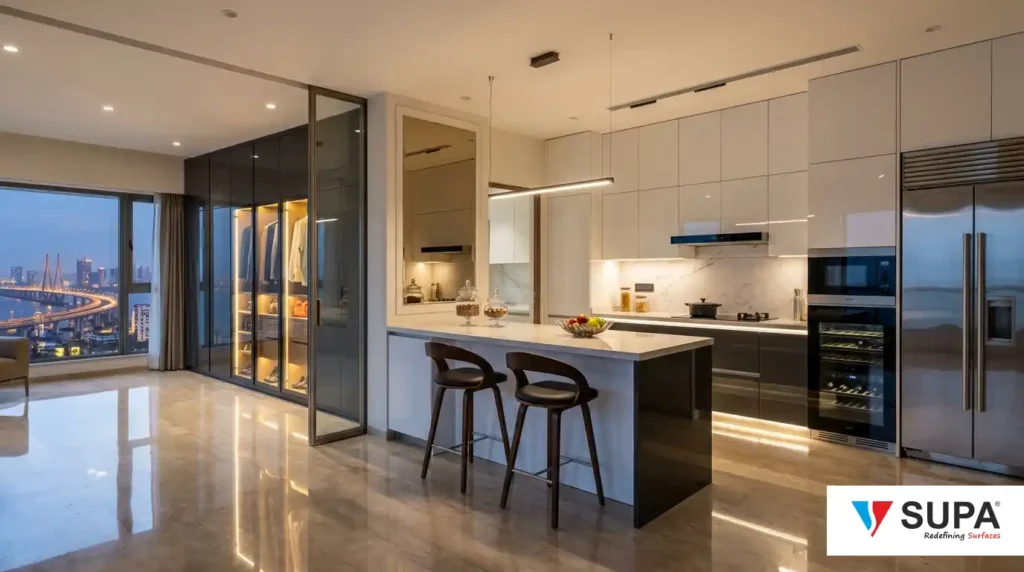
There is something that a high gloss laminate surface does to a room that no other finish quite replicates. It catches the light. It makes spaces feel larger. It gives furniture a sharpness that reads as contemporary and deliberate. When it is used well, it is genuinely striking.
But gloss is not a finish you apply everywhere without thinking. Used in the wrong place or in the wrong context, the same qualities that make it impressive become problems. This is an honest guide to where high gloss laminates perform brilliantly and where they make your life harder than it needs to be.
Why Gloss Laminates Are Coming Back Strongly in 2026
There was a period where matt finishes dominated every conversation about interior surfaces. That trend has not reversed exactly, but gloss has made a significant return as part of a more layered approach to specifying materials. Clean, minimal briefs where surfaces carry visual responsibility without clutter are driving demand for quality gloss laminates in kitchens, bedrooms, and contemporary living spaces.
The improvement in gloss laminate quality has also contributed. Earlier gloss products tended to yellow over time or carry a plastic undertone that gave them away as synthetic. Modern HPL gloss laminates hold their colour, their reflective quality, and their surface hardness far better than products from even five years ago.
What Gloss Laminates Do Well
Light reflection and space perception
Gloss surfaces reflect both ambient and artificial light, which makes rooms read as larger and more open. In compact apartments, urban homes with limited natural light, and any room where you want to push the sense of space, gloss laminates do meaningful work beyond just looking good.
Surface that actually cleans
The non-porous nature of a gloss laminate surface means cooking grease, ink, and dust sit on top rather than penetrating. A damp cloth takes off most marks. For kitchen applications where surfaces get splashed and touched constantly, this is a real practical advantage.
Colour saturation and visual impact
Colours appear more saturated and vibrant on gloss. If the design intent requires a bold colour statement – a deep navy, a rich burgundy, a clean optical white – gloss delivers that impact in a way that matt finishes absorb rather than project.
Contemporary and minimal design language
High gloss laminates sit naturally within modern, minimalist, and European-influenced design briefs. Handle-less shutter designs, clean-line modular kitchens, and contemporary master bedrooms all read better with gloss as the primary finish than they would with matt.
Where Gloss Creates Problems
Fingerprints and smudge marks
This is the consistent complaint from every homeowner who has lived with gloss kitchen shutters or wardrobe doors for a few months. High-traffic surfaces collect visible fingerprints quickly. Anti-fingerprint coated variants reduce this significantly but cannot eliminate it entirely. If your client has children or runs a busy kitchen, set expectations clearly upfront.
Scratch visibility
A surface scratch on a gloss laminate is more visible than the same scratch on matt because the reflective surface highlights any imperfection. For furniture in homes with children or pets, or in commercial spaces with heavy daily contact, this is a genuine consideration when choosing a finish grade.
Substrate requirements
Gloss laminates are less forgiving during installation than matt. Any unevenness in the MDF or plywood panel beneath will show through the gloss surface. Proper substrate preparation and careful adhesive application are not optional on gloss work. This adds installation time and skill requirements that need to be factored into project budgets.
Where to Use Gloss Laminates and Where to Avoid Them
| Space | Suitability | Notes |
|---|---|---|
| Modular kitchen upper cabinets | High | Away from direct cooking zone reduces fingerprint frequency |
| Wardrobe shutter fronts | High | Works best in master bedrooms with controlled handling |
| TV unit and media panels | High | Gloss with contrasting matt accents is a strong pairing |
| Bathroom vanity fronts | High | Use moisture-resistant HPL grade specifically |
| Feature walls and backsplashes | Medium-High | Large-format sheets work well on smooth prepared substrate |
| Home office and study furniture | Medium | Screen glare from reflective surfaces can cause fatigue |
| Children’s room furniture | Low | Every mark shows, matt or textured is more practical here |
Pairing Gloss with Other Finishes
The most effective contemporary interiors rarely run a single finish throughout a space. Gloss used in combination with matt or textured accents creates the kind of visual depth and material contrast that makes a room feel considered rather than uniform. A white gloss kitchen with a muted wood-grain island is a pairing that has earned its place as a design standard for good reason.
Supalam’s range is built for this kind of combination work. The Acryglem collection handles premium gloss applications, while the broader catalogue provides matt, textured, and wooden-finish laminates that pair naturally alongside it without any visual conflict.
Practical Maintenance for Gloss Surfaces
- Daily: Soft microfibre cloth, lightly damp. No pressure required.
- Fingerprints: A few drops of glass cleaner on a soft cloth, buff dry after.
- Grease or cooking marks: Mild dish soap diluted in water, wipe and rinse clean.
- Avoid completely: Abrasive pads, bleach-based cleaners, anything that scores the surface.
If gloss laminates are the right call for your project, Supalam’s catalogue covers options across colours, thicknesses, and surface grades.
Explore Supalam’s Gloss Laminate Range | Acryglem, Kitchen Laminates, e-Catalogue at supalam.com
Frequently Asked Questions
Are high gloss laminates suitable for Indian kitchens?
Yes, with the right grade. High gloss laminates look sharp in kitchens and clean up easily. They do show fingerprints and marks more readily than matt finishes, so for shutter fronts near the cooking zone, an anti-fingerprint coated gloss variant works better in day-to-day conditions.
Do gloss laminates scratch easily?
Standard gloss laminates show surface scratches more visibly than matt finishes because of how light reflects off them. For high-use furniture, specifying scratch-resistant HPL in a gloss finish gives you the visual impact without the compromise on surface durability.
What thickness of gloss laminate should I use for furniture shutters?
1 mm is the standard for furniture shutters and flat panels. For curved profiles and post-forming applications, 0.8 mm works better due to its flexibility. On wide doors and high-impact surfaces, 1 mm provides better edge stability over time.
Can gloss laminates be applied to walls?
Yes. Gloss laminate sheets on feature walls and backsplashes create a reflective, expansive feel that works particularly well in compact rooms. Make sure the substrate is smooth and moisture-sealed before application to avoid any surface imperfections showing through.
How do I clean high gloss laminate surfaces without damaging them?
A soft, damp microfibre cloth handles most daily cleaning. For fingerprints, a small amount of glass cleaner on a soft cloth works well. Avoid abrasive pads, bleach-based cleaners, or dragging sharp objects across the surface. Buff dry after wiping to avoid water marks.