
Standard laminates cover most of what architects and interior designers need, most of the time. But every now and then a project comes along where the brief cannot be answered by anything in a standard catalogue , a hospitality interior that needs a completely custom surface, a corporate brand wall that has to match specific colour values, a residential feature panel that should look like nothing else on the market.
That gap is exactly what Supa Digipedia was developed to fill.
What Supa Digipedia Actually Is
Supa Digipedia is a 1mm+ high-pressure laminate from Supalam in which the decorative surface is created through digital printing rather than the rotogravure cylinder process used in conventional laminates.
The distinction matters. Rotogravure printing uses physical metal cylinders to apply the design , which means every design needs to justify the cost of making a cylinder. That cost limits what brands can produce to designs with broad commercial appeal. Unusual patterns, photo-realistic textures, and anything custom simply cannot be done this way at a sensible price.
Digital printing removes that constraint entirely. The design is a file. No cylinders, no tooling cost, no minimum order tied to cylinder amortisation. The practical result:
- Any design can be printed , photography, illustration, custom artwork, architectural textures
- Photo-realistic resolution with genuine depth and detail
- Pattern repetition can be eliminated , unlike rotogravure prints that repeat every metre or two
- Colour accuracy to within 1 Delta-E of the target value, which matters when brand colour matching is part of the brief
- Fast production turnaround for bespoke project requirements
How It Compares to Standard Laminates
| Standard HPL Laminates | Supa Digipedia | |
| How the surface is made | Rotogravure cylinder printing | Digital direct-to-paper printing |
| Design options | Catalogue only | Unlimited , any file, any pattern |
| Pattern repetition | Repeats every 1.3 to 2.5 metres | Can be fully non-repeating |
| Custom design feasibility | High tooling cost makes it expensive | No tooling , custom is practical |
| Colour matching accuracy | Pantone approximate | Delta-E under 1 , very precise |
| Surface durability | Standard HPL | Standard HPL , no difference |
| Finish options | Matte, satin, gloss, embossed | Matte, satin, gloss, sync texture |
Where Designers Are Using It
Hotels, Restaurants and Hospitality Interiors
Hospitality projects often have the strictest brief in terms of design originality. Every surface needs to feel deliberate and brand-consistent. Supa Digipedia gets specified for custom wall panels, branded furniture, and feature surfaces that cannot come from any catalogue. The combination of HPL durability and full design freedom makes it the right tool for this category.
Retail and Branded Fit-Outs
Banks, showrooms, luxury retail , anywhere that needs surfaces matching a specific brand colour standard. The colour precision of Digipedia makes it the specification of choice when a Delta-E tolerance is actually in the brief.
Premium Residential Feature Walls
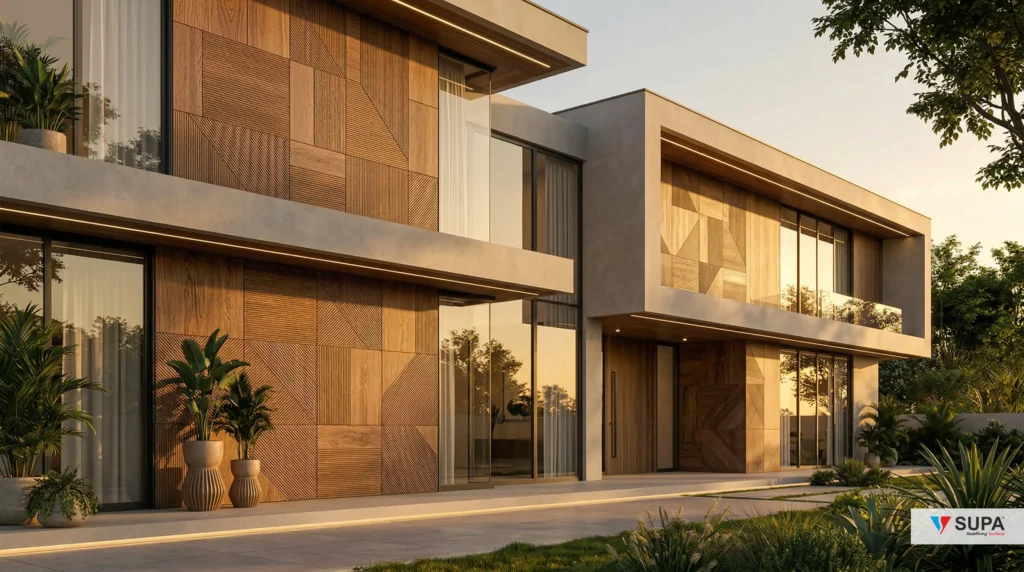
Architects are using Supa Digipedia on high-end residential projects to create feature surfaces that simply do not exist in the standard market. Aged concrete with genuine texture variation. Raw steel finishes. Custom stone patterns that do not repeat across a 5-metre wall. The kind of surface that a client notices immediately and asks about.
Corporate Interiors
Brand walls, reception counters, meeting room feature surfaces , particularly in environments where the design brief comes with specific Pantone or RAL colour requirements. Digipedia handles these with an accuracy that standard laminate production cannot match.
How to Specify It for a Project
- Provide the design file in CMYK at a minimum of 300 DPI at intended print size.
- Specify surface finish , matte, satin, or gloss.
- Confirm sheet size requirements. Standard HPL dimensions apply.
- For brand-critical colour applications, request a laminate colour proof before committing to full production.
- Send a project brief to info@supalam.com for a custom quotation. The team will advise on feasibility and turnaround.
A Few Questions That Come Up
Can actual photographs be printed on it?
Yes, as long as the file is supplied at a usable resolution , 300 DPI at print size minimum. The Supalam technical team can advise on file preparation if needed.
Is the print as durable as a standard laminate?
Yes. Digipedia goes through the same HPL manufacturing process , high temperature, high pressure, protective overlay , as standard Supalam laminates. Scratch resistance and surface hardness are equivalent to the rest of the range.
What is the minimum order for a custom design?
Because there is no tooling involved, minimums for custom work are significantly lower than for rotogravure-based production. The exact figure depends on the project. Contact the team with your brief for a specific answer.
Send your project brief to info@supalam.com or call +91 989 905 4064. Samples and colour proofs are available on request.